

Table of Contents
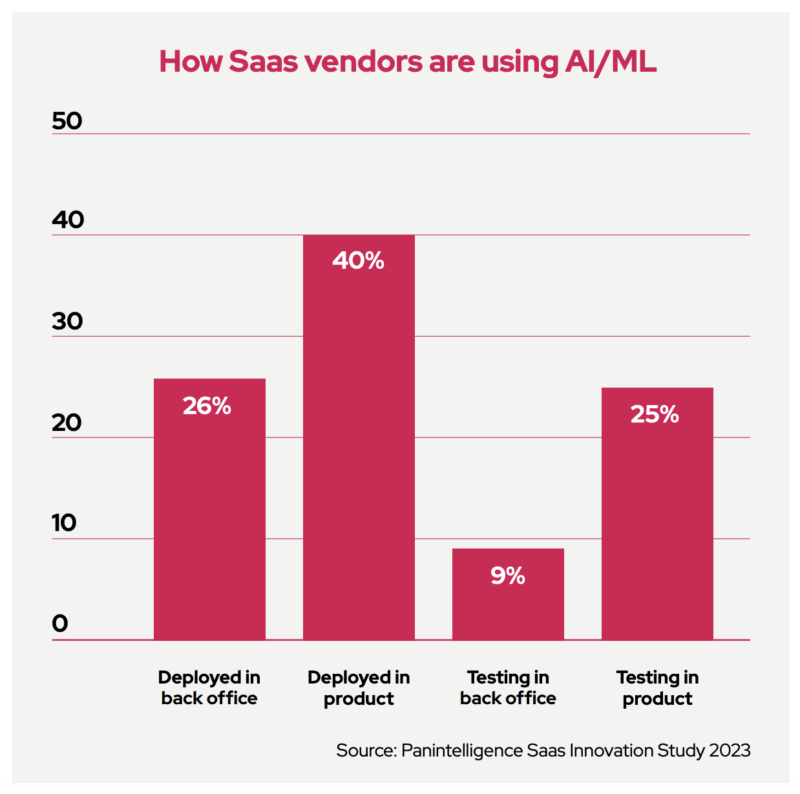
SaaS solutions are expected to reach new heights in 2024, with artificial intelligence (AI) and machine learning (ML) playing a large role. AI/ML are on their way to becoming indispensable, with 76% of SaaS firms either actively utilizing or exploring these tools (Moore, 2023). Their integration within SaaS will continue to reshape the industry, with innovative strategies driving unprecedented efficiency and user experiences. In this article, we'll explore the cutting-edge AI/ML strategies that are redefining the SaaS domain.
Making Decisions Using Predictive Analytics
The integration of predictive analytics, powered by ML algorithms, represents a pivotal strategy in the SaaS industry. This strategic move is poised to elevate decision-making processes by harnessing historical data patterns to anticipate future trends, potential challenges, and user needs.Predictive analytics in SaaS is akin to having a crystal ball that sifts through vast datasets, distilling valuable insights that guide strategic decision-making. By leveraging ML models, SaaS providers can extrapolate patterns and correlations from historical data, enabling them to make informed predictions about future events. This forward-looking approach goes beyond traditional business intelligence, providing a proactive stance that can significantly impact a SaaS company's competitive edge.
One key area where predictive analytics shines is in resource allocation. SaaS platforms can utilize these predictive models to forecast demand, optimizing resource distribution accordingly. This means anticipating peak usage periods, scaling resources dynamically, and ensuring optimal performance during periods of heightened activity. By doing so, SaaS providers not only enhance the user experience but also streamline operational efficiency, reducing wastage of resources and costs.
Additionally, predictive analytics extends its influence to risk management and issue prevention. By analyzing historical data for patterns indicative of potential challenges or vulnerabilities, SaaS platforms can preemptively address issues before they escalate. This proactive approach not only averts a crisis but also contributes to maintaining a seamless user experience, thereby enhancing customer satisfaction and trust.
The integration of predictive analytics also has profound implications for product development and feature enhancements. SaaS providers can use predictive models to identify features that are likely to be popular among users or foresee potential roadblocks in the adoption of new functionalities. This foresight empowers companies to tailor their offerings to meet evolving user expectations and industry trends.
In essence, the first point of emphasis in SaaS strategies for 2024 revolves around the strategic adoption of predictive analytics. In fact, a recent survey found that 28% of SaaS firms are experimenting with it to add data-driven functionality to their core products, which is nearly double the amount (15%) that have already incorporated this type of AI (Moore, 2023). By harnessing the power of ML to foresee trends, challenges, and user needs, SaaS providers can make decisions with unprecedented foresight, driving operational efficiency, user satisfaction, and staying ahead of the curve in an ever-evolving digital environment.
Related Article: Top 7 AI Coding Assistants in 2024
Making Decisions Using Real-Time Insights
The integration of real-time insights for agile decision-making stands out as a paramount strategy in the SaaS industry. This key strategy emphasizes the strategic use of AI/ML to derive immediate, actionable insights from vast and dynamic datasets.Real-time insights provide SaaS providers with a competitive advantage by allowing them to make informed decisions on the fly. AI algorithms process and analyze data in real-time, offering a comprehensive understanding of user behavior, system performance, and market trends. This agility in data processing enables decision-makers to respond promptly to changing conditions, capitalize on emerging opportunities, and address challenges in a proactive manner.
The ability to access real-time insights is particularly crucial in the fast-paced SaaS environment. Whether it's adapting to sudden shifts in user behavior, identifying and rectifying performance issues on the spot, or staying abreast of market trends, real-time insights empower decision-makers to navigate the dynamic landscape with confidence.
ML models play a pivotal role in continuously learning from new data inputs and adapting their analyses. This adaptive capability ensures that insights remain relevant and accurate in the face of evolving user behaviors and market dynamics. SaaS platforms can harness this adaptability to fine-tune their strategies, staying ahead of the competition and aligning their offerings with the growing needs of their user base.
Furthermore, real-time insights extend beyond internal operations and can be valuable for users as well. SaaS platforms can leverage AI to provide users with dynamic, real-time analytics and reporting, empowering them with the information needed to make informed decisions on their end.
In summary, the second essential strategy in SaaS for 2024 focuses on harnessing the power of AI and ML to generate real-time insights for agile decision-making. By enabling decision-makers to act promptly on the latest data, SaaS providers position themselves to be more responsive, adaptive, and competitive in an environment where the ability to navigate change with speed and precision is paramount.

Employing Automated Customer Support and Service
The adoption of AI/ML-powered automation emerges as a transformative strategy in the SaaS domain. This strategic emphasis revolves around leveraging advanced algorithms to streamline and automate repetitive tasks, marking a paradigm shift in how SaaS platforms manage routine processes.Automation in the SaaS context extends beyond basic task delegation; it involves the integration of intelligent algorithms that can understand, learn, and execute tasks with minimal human intervention. This not only accelerates processes but also frees up human resources to focus on more strategic, creative, and complex endeavors.
One prominent area where AI/ML-driven automation plays a pivotal role is in customer support and engagement. SaaS platforms can deploy chatbots and virtual assistants that use natural language processing (NLP) to understand user queries and provide real-time, contextually relevant responses. This not only enhances the efficiency of customer support but also ensures a seamless and instantaneous user experience. In fact, chatbots have the ability to handle 80% of routine customer questions, which could save a company up to USD 8 billion (Papas, 2018).
Moreover, in the realm of data entry and processing, automation algorithms can be trained to recognize patterns, extract information, and populate databases with minimal errors. This reduces the risk of manual errors, enhances data accuracy, and significantly speeds up data-related workflows.
SaaS providers can also leverage automation to enhance backend processes, such as system maintenance, updates, and monitoring. Intelligent algorithms can identify potential issues before they escalate, initiate routine maintenance tasks, and ensure that the SaaS platform operates at peak performance without causing disruptions to users.
The adoption of AI/ML-powered automation in 2024 is not just about replacing manual tasks; it's about creating a more agile and responsive operational environment. As such, SaaS companies that implement this key strategy in 2024 can adapt to changing user demands, scale their services efficiently, and achieve a level of operational excellence that sets them apart in a competitive market.
Using Personalization to Enhance Customer Experience
One of the most compelling applications of AI/ML in the SaaS landscape lies in the realm of enhanced personalization and customer experience. SaaS providers are poised to leverage advanced algorithms to delve into the intricacies of user behavior, preferences, and interactions with their platforms. This granular understanding enables these platforms to craft highly personalized experiences that resonate with individual users on a profound level.The key to this enhanced personalization lies in the ability of AI algorithms to analyze vast datasets, extracting meaningful patterns and trends. Through continuous learning, these algorithms evolve, adapting to the shifting preferences and behaviors of users over time. For SaaS companies, this means more than just offering generic solutions; it's about tailoring every interaction to the unique needs and expectations of each user.
Imagine a scenario where a SaaS platform, armed with sophisticated AI capabilities, can predict user needs before they are explicitly expressed. This could manifest in the form of recommending specific features, functionalities, or even anticipating potential challenges users might face based on historical data. Such anticipatory personalization not only streamlines the user experience but also positions the SaaS provider as an intuitive and responsive partner in the user's journey.
Moreover, the impact of AI-driven personalization extends beyond the initial user onboarding phase. It permeates throughout the entire user lifecycle, from feature adoption to issue resolution. SaaS platforms can dynamically adjust interfaces, suggest relevant content, and customize workflows, creating an ecosystem where users feel not only understood but catered to at a deeply individual level.
To sum up, the fourth point of emphasis in SaaS strategies for 2024 revolves around using AI/ML to transform user interactions from standardized transactions into personalized, engaging experiences. By doing so, SaaS providers are not merely delivering a service but cultivating a relationship with users, fostering loyalty and long-term engagement. This focus on enhanced personalization is at the forefront of creating SaaS experiences that are not just functional but truly transformative.

Related Article: What is Test-Driven Development? (And How To Get It Right)
Optimizing Resource Management
SaaS providers are strategically adopting AI/ML technologies to optimize resource management, marking a transformative shift in the way computing resources are allocated, utilized, and maintained. This fifth pivotal strategy focuses on harnessing the power of intelligent algorithms to ensure the efficient operation of SaaS infrastructure, balancing performance, and cost-effectiveness.One crucial aspect of resource management lies in the dynamic allocation of computing resources based on demand. AI/ML models can analyze historical usage patterns and predict future demand, allowing SaaS platforms to scale resources up or down in real-time. This elasticity ensures that the platform can handle fluctuations in user activity, providing optimal performance during peak usage periods while minimizing costs during periods of lower demand.
Moreover, predictive analytics plays a role in anticipating server downtimes or performance issues. By analyzing historical data and patterns indicative of potential problems, AI algorithms can predict and prevent issues before they impact the user experience. This proactive approach not only enhances the reliability of the SaaS platform but also contributes to maintaining user trust and satisfaction.
Cost optimization is another significant aspect of resource management. AI-driven algorithms can analyze cost structures, identify opportunities for optimization, and recommend strategies to minimize expenses without compromising performance. This strategic approach allows SaaS providers to maximize the value of their resources, directing investments where they are most impactful.
The integration of AI/ML in resource management extends to the efficient use of cloud computing services. SaaS platforms can leverage ML to identify the most cost-effective cloud solutions for specific workloads, optimizing the balance between performance and cost efficiency.
As such, the fifth key strategy in SaaS for 2024 focuses on leveraging AI/ML technologies to optimize resource management. By dynamically allocating computing resources, predicting and preventing performance issues, and optimizing costs, SaaS providers can create a more efficient and responsive infrastructure. This not only enhances the overall performance of the platform but also contributes to cost savings and operational excellence in a competitive market.
Ensuring Data Security and Privacy Compliance
While being the last strategy reviewed in this article, it certainly isn’t one of low significance. In fact, with SaaS companies handling vast amounts of sensitive information, security and fraud prevention definitely occupy a top position on their list of priorities (Moore, 2023). AI/ML strategies play a pivotal role in fortifying SaaS platforms against an ever-expanding array of cyber threats and fraudulent activities (Grigorescu, 2023).

AI-powered security systems bring a level of sophistication and adaptability that is essential in combating modern cyber threats. These systems leverage ML algorithms to continuously analyze vast datasets, identifying patterns indicative of malicious activities or potential security breaches. By learning from historical data and evolving to recognize new threat vectors, AI-driven security measures offer a proactive defense mechanism, staying one step ahead of cybercriminals.
Fraud prevention is another area where AI/ML strategies shine. ML models can analyze transactional data, user behavior, and other relevant patterns to detect anomalies that might indicate fraudulent activities. Whether it's unauthorized access attempts, financial fraud, or other malicious actions, AI/ML algorithms can swiftly identify and mitigate potential risks, safeguarding sensitive data and maintaining the trust of users.
Additionally, AI-driven security solutions excel in real-time threat detection and response. The ability to analyze and respond to security incidents in real-time is crucial in a landscape where cyber threats can develop rapidly. AI algorithms can autonomously identify and neutralize threats, minimizing the impact of security incidents and reducing response times.
Furthermore, the adaptive nature of AI/ML-driven security systems allows them to continuously learn and adapt to new attack vectors. This is particularly important in an environment where cyber threats are becoming increasingly sophisticated. SaaS providers can ensure that their security measures evolve alongside emerging threats, creating a robust defense that anticipates and mitigates risks effectively.
In brief, the sixth essential strategy in SaaS for 2024 revolves around fortifying security and preventing fraud through the strategic integration of AI and ML technologies. By leveraging these advanced technologies, SaaS platforms can proactively defend against cyber threats, detect and prevent fraud, and ensure the ongoing safety and integrity of their systems and user data.
Wrapping Up: Navigating the Future of SaaS
As we step into 2024, the integration of AI and ML into SaaS strategies is no longer a choice but a necessity for companies looking to thrive in a competitive market. The best AI/ML strategies in SaaS for 2024 will center around personalization, predictive analytics, automation, security, resource optimization, and real-time insights. By harnessing the power of these technologies, SaaS providers can not only meet but exceed user expectations while navigating the future of SaaS.References
Fortune Business Insights. (2023). Software as a service (SAAS) market size, share & covid-19 impact analysis, by deployment type (public, private, and hybrid), by application (Customer Relationship Management (CRM), Enterprise Resource Planning (ERP), content, Collaboration & Communication, BI & Analytics, Human Capital Management, and others), by Enterprise Type (Large Enterprises and smes), by Industry (IT & Telecom, BFSI, Retail & Consumer Goods, healthcare, education, manufacturing, and others), and Regional Forecast, 2023-2030. Software as a Service [SaaS] Market Size & Growth, 2030. https://www.fortunebusinessinsights.com/software-as-a-service-saas-market-102222Grigorescu, I. (2023). 12 SAAS trends for 2024 that work today. PayPro Global blog. https://blog.payproglobal.com/saas-trends
Moore, Z. (2023). The Artificial Intelligence Saas Landscape: Panintelligence’s report. Panintelligence. https://panintelligence.com/blog/the-artificial-intelligence-saas-landscape-key-findings/
Papas, P. (2018). Digital Customer Care in the age of ai - IBM. IBM. https://www.ibm.com/downloads/cas/GQDGPZJE